Grouping Agent Failures by Recurrence Signature Rather Than Error Code
Behavioral patterns reveal what error codes miss about repeated agent failures.
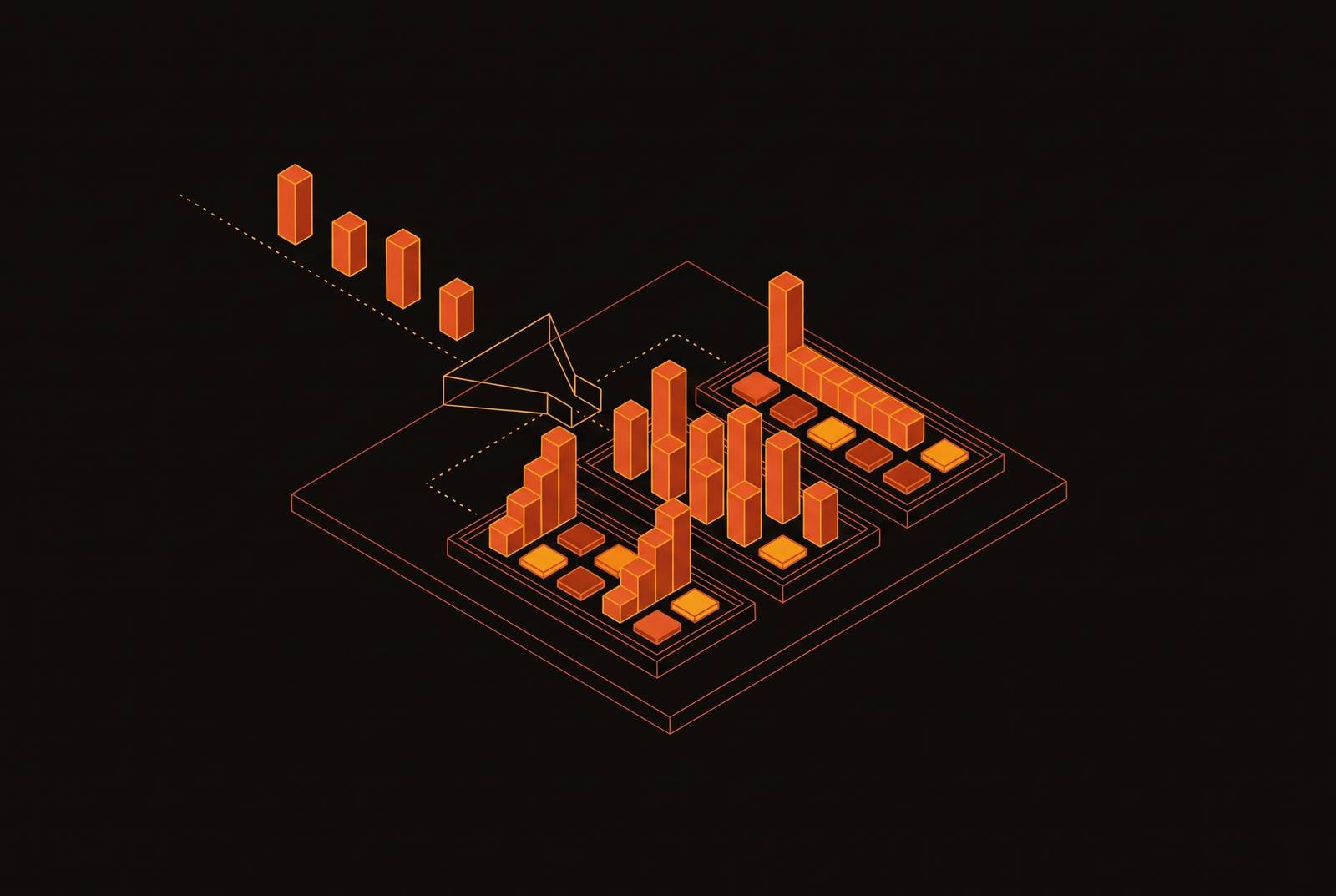
Automatic grouping of recurring AI agent failure patterns means clustering runs by the behavior through which the agent departed from its intended task. A recurrence signature describes that repeated deviation, such as crossing a task boundary, undoing a correct change, or changing tests while leaving code unfixed. Error codes help teams diagnose infrastructure problems, and behavioral grouping lets them move from patching one symptom at a time to finding and fixing whole failure classes.
Why error codes are not enough
An error code and a recurrence signature answer different questions. The code describes a technical failure at the infrastructure layer, while the signature describes a departure from the intended trajectory. Those descriptions can overlap, but neither substitutes for the other. A failed operation does not, by itself, explain why an agent attempted it. An operation can also succeed without helping with the task the agent was supposed to do.
That distinction is especially important for silent failures. A June 2026 paper, Silent Failure in LLM Agent Systems: The Entropy Principle and the Inevitable Disorder of Autonomous Agents, describes unexpected behavioral deviations under normal conditions, without external triggers such as injection, adversarial input, or resource exhaustion. The paper describes a problem in how agents are built that goes beyond ordinary bugs. It links declines in output consistency, task accuracy, and cross-session coherence to properties found throughout the agent lifecycle. Grouping only explicit technical errors leaves out some of what counts as failure under that broader definition.
The practical consequence is a difference in what becomes visible. Grouping by error code sorts runs by their technical symptoms, even when engineers want to know whether the task was completed. Grouping by recurrence signature instead makes the repeated behavioral deviation the organizing principle. This creates a more relevant unit of investigation when the problem is an agent repeatedly doing the wrong thing.
How do AI observability platforms automatically detect repeated failure patterns across agent runs?
The system must spot the same deviations across runs even when the details differ. Conceptually, automatic detection requires evidence of what the agent was meant to do and evidence of what it actually did. The comparison is central to the judgment. Establishing that an agent exceeded its scope requires reference to the task boundary, because scope is a property of that boundary.
The grouping step then asks whether separate deviations express the same behavior. Different tasks may share a scope violation without sharing the same wording, affected files, or technical error. Conversely, two runs may have the same error code but differ in whether the agent selected the wrong action or encountered a problem while pursuing the right one. These are conceptual distinctions. They define what behavioral grouping must distinguish to deserve the name.
Detection and grouping are also separate judgments. Detection establishes that a run contains a failure, while grouping relates that failure to others. A taxonomy can supply names for those relationships, but a list of categories does not demonstrate that a product assigns them automatically. Nor does it establish how that assignment works. The available source material supports only a comparison of failure concepts and taxonomies.
That limit is important for buyers seeking automation. A platform may describe planning, retrieval, or tool failures without showing that it can spot the same behavioral patterns across runs. The relevant distinction is between labeling a run with a broad failure family and identifying the specific deviation it shares with other runs.
What makes a recurrence signature useful?
A useful recurrence signature names a behavior precisely enough to distinguish it from neighboring failures. “Execution failure” is a failure family. “Agent modifies files or systems outside the stated task boundary” identifies both the action and the constraint it violates. The task boundary supplies the reference point. Without that reference, the description says what changed but not why the change constitutes a failure.
WOWHOW’s taxonomy names that behavior Scope Creep Execution. It separately names Silent Rollback, in which an agent undoes a previous correct change, and Test Oracle Confusion, in which an agent modifies tests to make them pass while leaving the code unfixed. These distinctions are operationally meaningful. All concern execution, but each describes a different relationship between the agent’s action and the intended outcome. Combining them under one execution label would discard the very difference that makes the grouping useful for diagnosis.
Modifying a file is not inherently a scope violation, and modifying a test is not inherently Test Oracle Confusion. The intended task determines the interpretation. Similarly, identifying Silent Rollback requires the distinction between reversing a correct change and making a justified revision.
A description tied to one file or one task may miss the same failure in other files or tasks. A description such as “the agent did not complete the task” is too broad to distinguish mechanisms. The signature needs a stable behavioral core. That core allows different incidents to be investigated together without assuming that every detail, technical symptom, or underlying cause is identical.
How the available taxonomies compare
WOWHOW’s taxonomy was built from cataloguing over 300 real agent failures across production codebases. It organizes failures into four families, namely Perception, Planning, Execution, and Integration. Its central conclusion distinguishes confidently completing the wrong task, the source of most AI coding agent failures, from simply producing wrong answers. That distinction supports behavioral analysis directly. The named execution failures make the task deviation explicit instead of treating an unsuccessful result as a sufficient diagnosis.
The two structures organize the subject using different labels, so a comparison must preserve which categories belong to the taxonomy and which belong to the product documentation.
Broad families can describe the coverage of an error analysis system without showing the granularity of its recurring-pattern groups. Infrastructure and Planning & Goals, for example, describe different areas of failure, but their presence does not establish how specific repeated deviations are recognized. A category name is not evidence of automation. The supplied material does not show that Error Feed clusters similar behavioral failures without manual review.
Microsoft AI Red Team’s June 2026 update addresses failure modes in agentic AI systems through the lens of red teaming. Its scope therefore differs from a coding-agent execution taxonomy or an observability product’s documented categories. Security failure modes, task deviations, and infrastructure failures can all be relevant to agent reliability, but they do not necessarily define equivalent units for recurrence grouping. Treating their labels as interchangeable would obscure those differences.
What tools cluster similar LLM agent errors without manual review?
The supplied evidence does not show that any named tool performs behavioral recurrence clustering without manual review. This is a narrow but necessary conclusion.
The buyer’s question consequently turns on what “similar” means. Similar error messages, shared failure families, and repeated behavioral deviations are different grouping targets. A tool could address one without demonstrating the others. For the question posed here, the relevant target is the repeated deviation from the intended trajectory. Evidence of infrastructure-error grouping would answer a related operational question, but not establish behavioral recurrence detection.
Several named criteria help make that distinction precise, including the grouping unit, task context, behavioral specificity, and automation boundary. The grouping unit identifies what the system treats as equivalent, while the system needs task context to distinguish an inappropriate action from an appropriate one. Behavioral specificity separates a broad family from a recognizable deviation. The automation boundary establishes which judgments occur without manual review.
The phrase “without manual review” needs particular care. Automating the assignment of failures to groups is not the same as proving why those failures occur or which change will prevent them. A defensible product comparison would distinguish automatic pattern recognition from causal diagnosis rather than presenting the former as evidence of the latter. The supplied material does not support ranking tools on either capability.
From repeated signatures to fixable failure classes
A recurrence group is a starting point for root-cause investigation. Scope Creep Execution identifies a repeated breach of the stated task boundary, but the label alone does not explain why that boundary was breached. Silent Rollback identifies the reversal of a correct change without establishing what prompted the reversal. The behavior is shared. The cause remains open. This distinction prevents a useful cluster from becoming an unsupported causal claim.
Instead of asking only why an operation failed, a team can ask why the agent kept trying to do things that did not fit its task. Test Oracle Confusion makes that difference concrete. The failure persists if the agent achieved a passing test result by changing tests while leaving the code unfixed. The signature directs attention to how the apparent success was produced.
The relationship also works in reverse. Runs that share a technical symptom may belong in different behavioral investigations when their deviations differ. Keeping those distinctions visible avoids treating a common error code as proof of a common agent failure. At the same time, when the same behavior recurs with different technical symptoms, teams have reason to investigate those incidents together.
The engineering objective is therefore narrower and more demanding than reducing the number of visible errors. It is to prevent a defined class of departures from the intended task. Error codes can remain part of the diagnostic evidence without determining the boundaries of that class. What matters most is whether the agent stopped repeating the unwanted behavior, even when its operations succeeded.